
Workers: Return-to-work information
Everyone’s experience when recovering from their injury and returning to work is different. Generally, people who return to their workplace as soon as it is safe to do so see improved physical and mental health. Returning to work safely while recovering from an injury requires collaboration between the worker and the employer.
- Benefits for workers
- Steps to take
- Need help?
- Resources
Learn about your responsibilities after a workplace injury and how you can collaborate with your employer to create a return-to-work plan that works for you.
Benefits for workers
There are many benefits to staying connected to your workplace and returning to work as soon as it is safe to do so after an injury. People who return to work as soon as it’s safe to do so usually recover faster.
Some of the other benefits include:
- Keeping income and employment benefits
- Maintaining physical and mental health
- Staying connected to your co-workers and workplace
- Maintaining job security by keeping in contact with your employer
- Reducing your risk of long-term disability
Steps to take
If you’ve been injured at work, you and your employer have a legal duty to cooperate with each other and with WorkSafeBC in your safe and timely return to work.
Steps to take after your injury:
- Talk with your employer as soon as possible and stay in touch
Keep in contact with your employer after your injury. As part of your responsibilities, you’re required to stay in touch with them throughout your recovery. The relationship with your employer is key to a successful return to work and a faster recovery. -
Stay connected to your workplace
As much as possible, take part in staff meetings, special events, training, and/or even coffee with co-workers. Staying connected supports a successful recovery and return to work and can prevent long-term disability. -
Discuss suitable work with your employer
Together with your employer, identify safe and suitable work for you. Think about what tasks you can do safely while you recover. These may be tasks associated with your regular work or other, more suitable tasks that allow you to contribute while recovering. The duties must be meaningful, be within your abilities, and not cause harm or slow your recovery. For practical support and accommodation ideas specific to your job tasks, visit Job Demands Accommodation Planning Tool (JDAPT) for workers. -
Collaborate with your employer to develop a return-to-work plan
Create a plan together that focuses on your abilities and progresses over time, with the goal of returning to your pre-injury level of employment and restoring your earnings. Meet with your employer regularly and adjust the plan based on your recovery. - Document your return-to-work plan
A written return-to-work plan helps everyone understand the plan’s goals and expectations. Although WorkSafeBC doesn’t require medical approval for you to return to work, a written plan can help to update your health care provider on your progress, if needed.
Learn more about your duty to cooperate after a workplace injury.
Need help?
Talk to your employer, supervisor, or health care provider if you have any questions about your recovery and return to work.
We’re also here to help. Please call our Claims Call Centre if:
- You have any questions or concerns about your return to work
- Your return-to-work plan isn’t progressing as anticipated
- You have questions about your claim
Resources
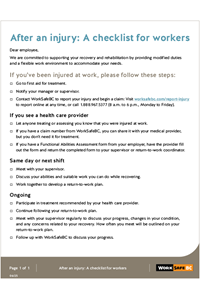
After an injury: A checklist for workers
This checklist is designed to help workers keep track of what they need to do after a workplace injury. Employers can give injured workers this template and modify it to fit the needs of the workplace....
Title
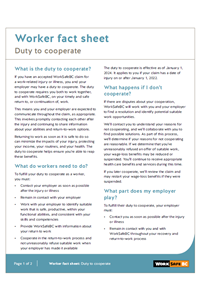
Worker fact sheet: Duty to cooperate
If you have an accepted WorkSafeBC claim for a work-related injury or illness, you and your employer may have a duty to cooperate. The duty to cooperate requires you both to work together, and with...
Title
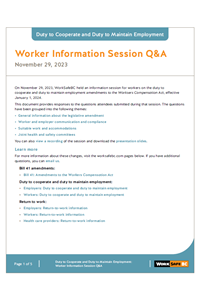
Worker Information Session Q&A: Duty to Cooperate and Duty to Maintain Employment
Read questions and answers from our November 29, 2023, information session for workers on the duty to cooperate and the duty to maintain employment.