
Employers: Return-to-work information
Supporting injured workers to remain at work or return to work while they recover is good for them and good for business. When workers can do suitable work while they recover, it keeps them connected to the workplace and can prevent long-lasting disability. To help with this, both workers and employers have formal responsibilities to encourage connection and collaboration after a work-related injury or illness.
- Benefits of supporting return to work
- Steps to take
- Need help?
- Resources
Learn about your responsibilities after a workplace injury and how you can keep injured workers connected to the workplace while they recover.
Benefits of supporting return to work
Keeping a worker connected to the workplace and giving them suitable duties can benefit your business in many ways. These may include:
- Keeping a skilled and experienced worker, which reduces recruitment and retraining costs
- Developing a stronger relationship with the worker, by demonstrating that they are valued
- Reducing the burden on co-workers
- Reducing productivity losses and workflow interruptions
- Reducing WorkSafeBC premiums
Steps to take
When a worker is injured, you and the worker have legal duty to cooperate with each other and with WorkSafeBC in the worker’s safe and timely return to work.
Learn how to manage a safe return to work
Wondering where to start? Read our guide, Managing a Safe Return to Work, for practical tips and links to helpful templates.
To help ensure a worker’s timely and safe return to work, follow these steps:
- Talk with the worker as soon as possible and maintain ongoing communication
As part of your responsibilities, you’re required to keep in contact with the injured worker after the injury. Your relationship with the worker is key to their successful return to work and a faster recovery. -
Keep the worker connected to the workplace
Include the injured worker in staff meetings, special events, training, and/or even coffee with co-workers. Staying connected supports the worker’s recovery and return to work. -
Ask the worker what duties they can do
Be flexible, and together with the worker identify safe and suitable work for them. To support them while they recover, the worker’s duties must be meaningful, be within their abilities, and not cause harm or slow their recovery. It may mean doing alternate tasks, working a modified schedule, or approaching things a little differently.
Focus on what the worker can do, rather than what they can’t. For example, someone with an injured shoulder can still perform safe and suitable work in the office by answering phones. For practical support and accommodation ideas specific to an injured worker’s job tasks, visit Job Demands and Accommodation Planning Tool (JDAPT) for organizations. -
Collaborate with the worker to develop a return-to-work plan
Encourage everyone to focus on what the worker can do. Collaborate with the worker to develop a return-to-work plan. The plan should progress them back to their pre-injury level of employment and allow them to restore their earnings. Meet with the worker regularly and support their progress as they recover. Modify and adjust the plan as needed. - Document the return-to-work plan
A written return-to-work plan helps everyone understand the plan’s goals and expectations. Give the injured worker a copy of the plan and send one to WorkSafeBC. Although WorkSafeBC doesn’t require medical approval for a worker to return to work, a written plan helps the worker to update their health care provider, if needed.
Some employers also have an obligation to maintain an injured worker’s employment. This applies if you regularly employ 20 or more workers and have employed the injured worker for at least one year before the worker’s injury.
To learn more about this and your duty to cooperate, see Employers: Duty to cooperate and duty to maintain employment.
Need help?
For assistance on a claim
Please call our Claims Call Centre if:
- You have any questions or concerns about a worker’s return to work
- A return-to-work plan lasts longer than anticipated
- The worker isn’t making progress toward their pre-injury level of duties
For information on return-to-work best practices
Please contact our Consultation and Education team in Return to Work Services if you:
- Have general questions about return-to-work planning
- Need help setting up a return-to-work program
- Are looking for return-to-work training and education
Resources
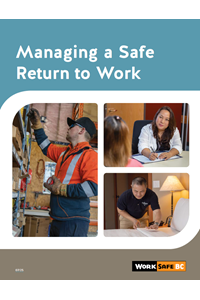
Managing a Safe Return to Work
This guide provides tips and templates to help employers put a seamless process in place for handling workplace injuries and helping employees get back to work safely.
Visit Employers:...
Title

Has an employee been injured at work?
This checklist can help employers keep track of what to do when helping an injured employee safely return to work.
For more information, visit worksafebc.com/returntowork.
Title
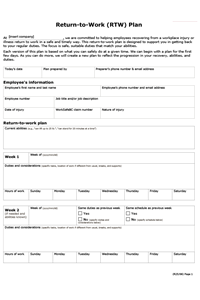
Return-to-Work (RTW) Plan: Template for Employers
This template is for employers to plan an employee’s return to work after a work-related injury or illness.
Return-to-work plans can be as short as a few days or as long as a few weeks. Depending...
Title
Return-to-work strategies to support workers who experience psychological injuries
Safely returning to or remaining at work following a psychological injury requires collaboration between the injured worker and their employer. This guide is designed to help find actionable ways to...