
Setting up for success with small tools training
Published on: September 4, 2026
Workers build safe habits when employers include practical, hands-on training from the start. This training can help prevent common injuries before work begins.
By Marnie Douglas
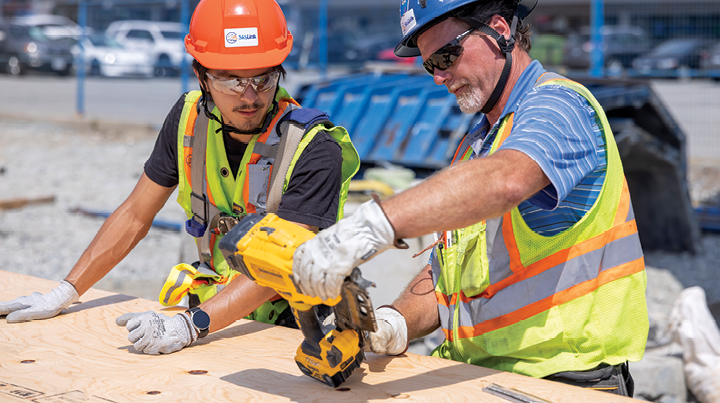
New and young workers often arrive on a jobsite with a range of training, experience, and safety habits. Hands-on small tools training can help close those gaps and set workers up for safer, more successful careers from day one.
That’s the approach being taken on the Surrey Langley SkyTrain project. SkyLink Guideway Partners, a consortium that includes FlatironDragados and Ledcor, is building the 16-kilometre elevated guideway and active transportation elements for the Province of B.C. The project will link King George Station in Surrey to the new Langley City Centre Station in downtown Langley.
Steve Earle, general superintendent at SkyLink, says the small tools training program was introduced after the project saw an increase in hand injuries and incidents involving tools. Portable tools such as hammers, wrenches, grinders, nailers, drills, and saws were contributing to pinches, cuts, scrapes, and similar injuries.
Responding to injury trends
Earle puts it simply: “It doesn’t take much for minor injuries and near misses to turn into serious injuries. We don’t want to ever see people injured on the job.”
Through jobsite observations, he often came across new and young workers using tools without proper training. Because the project employs a high percentage of apprentices, some workers were less familiar with small tool best practices than might be expected. In many cases, it was just assumed workers had those skills rather than verifying they’d been taught. With about 600 tradespeople on the project, that gap mattered.
“We have a range of skills and experience levels in our workforce, so this training sets everyone up very well,” he says, adding that training has helped to reduce lost time and increase productivity by preventing minor injuries and near misses.
What began as a response to injury trends is now part of worker onboarding. Andrew Kelly, also a general superintendent with SkyLink, helped bring the training to the project after seeing a similar program at Ledcor.
“We saw that this kind of training could give workers a safer starting point,” says Kelly. “It made sense to bring that approach to this project and adapt it to the tools and risks our crews are working with.”
Small tools with serious risks
WorkSafeBC occupational safety officer Gary Rose notes that these tools may be familiar, but that doesn’t mean every worker has been trained to use them safely.
Rose brings years of hands-on trades experience to his inspectional work with SkyLink. Earlier in his career and before joining WorkSafeBC, he worked as a ticketed carpenter on the Millennium Line SkyTrain extension project. His experience in the trades has shown him that familiarity can sometimes mask gaps in training.
“We just can’t assume that workers know how to use all the tools they’re expected to work with. This training provides an opportunity to establish a baseline of knowledge and create a safe work culture.”
For Rose, that early focus on training can have lasting benefits. “The small tools training may seem like a small step, but it’s significant. It’s an investment in worker safety,” he adds.
When experience is not enough
Employers in B.C. are responsible for training and orienting new workers. Training prepares workers to do their jobs safely and understand the safety measures on a jobsite.
For SkyLink, small tools training bridges the gap between familiarity and safe, competent tool use. Workers may arrive with years of experience, but that doesn’t always mean they have been taught the safest way to do a task.
“Unfortunately, bad habits can develop at any stage in a worker’s career. This training is an opportunity to reinforce safe work practices and proper tool use,” Rose adds.
Learning by doing
The training takes place inside a seacan (a modified shipping container) with 18 compartments. Each compartment is dedicated to a different tool and includes the tool’s user manual and safe work procedures. Rather than listening to a presentation, workers handle the tools themselves under supervision.
During the 2.5-hour session, workers move from station to station with a trainer. They learn how to inspect tools before use, handle them safely, install and change attachments, and recognize common risks.
Kelly says the training gives workers a chance to learn by doing before they use the tools on the job. “People can put their hands on the tools, understand them, and use them, all in a safe space and under supervision,” Kelly says.
Reinforcing safe habits
Earle emphasizes that rather than testing workers during training, supervisors observe work on the jobsite and provide additional training when needed.
“We see two important advantages with this,” he explains. “First, the worker will use the tool in the precise application in their job task, which may bring to light additional hazards. Second, the crew foreperson is directly involved in assessing and mentoring the worker, reinforcing the supervisor’s responsibility to support and guide workers.”
These jobsite observations help identify gaps in knowledge and correct unsafe habits before they lead to injuries.
Kelly says the training is already showing results, with fewer injuries and less misuse of tools among new and young workers. “It’s a great initiative and it’s been very well received by workers and supervisors. Any training that helps workers learn new skills and use them safely on the job is a positive step,” he says.
Added value for supervisors
The program is also strengthening supervisors’ coaching, communication, and leadership skills. Earle says many field supervisors are finding it easier to give feedback and support new workers, especially those who are new to the industry. Using these reviews as teaching moments benefits everyone.
For Earle, the program’s success is measured not only by fewer injuries, but also by the growth he sees in workers and supervisors alike. “It’s rewarding for everyone, especially to see people new to the industry learn new skills and grow comfortable using them.”
Building on a safety win
The success of the program has prompted the SkyLink partner companies to develop small tools training for use across multiple projects. It has helped establish a consistent training method while giving each site flexibility to address its own tools and risks.
“We want everyone to go home safe at the end of the day,” says Kelly. “If a few hours of training can prevent an injury, build skills, and help someone start their career on the right foot, it’s worth every minute.”
For more information
Training and orienting young and new workers is a required part of your overall workplace health and safety.
Employers can visit worksafebc.com to download a young and new worker training guide and orientation checklist. You can use these resources to help you plan and implement your workplace orientation program.
More resources can be found on our Training & orienting workers webpage.
This article originally appeared in the Fall 2026 issue of WorkSafe Magazine.
To read more or to subscribe, visit WorkSafe Magazine.
More in this issue
- Ask an officer: Training and orienting new and young workers
- Towing safety beyond the shoulder
- Turning safety into a habit for young workers
- Stitching safety into every step
- Building respectful workplaces in tourism and hospitality
- Preparing for regulatory updates
- Making it easier to connect with us