
Giant hogweed
What is giant hogweed?
- Giant hogweed (scientific name: Heracleum mantegazzianum) is a large plant in the parsley family.
- It’s also known as the giant cow parsnip.
- It’s a perennial, which means it survives for more than one year.
- The plant is very large, growing up to 6 m tall. Its leaves can be as much as 1.5 m across.
- After a few years of growth, the plant blooms in summer. It forms large clusters (up to 1 m across) of small white flowers.
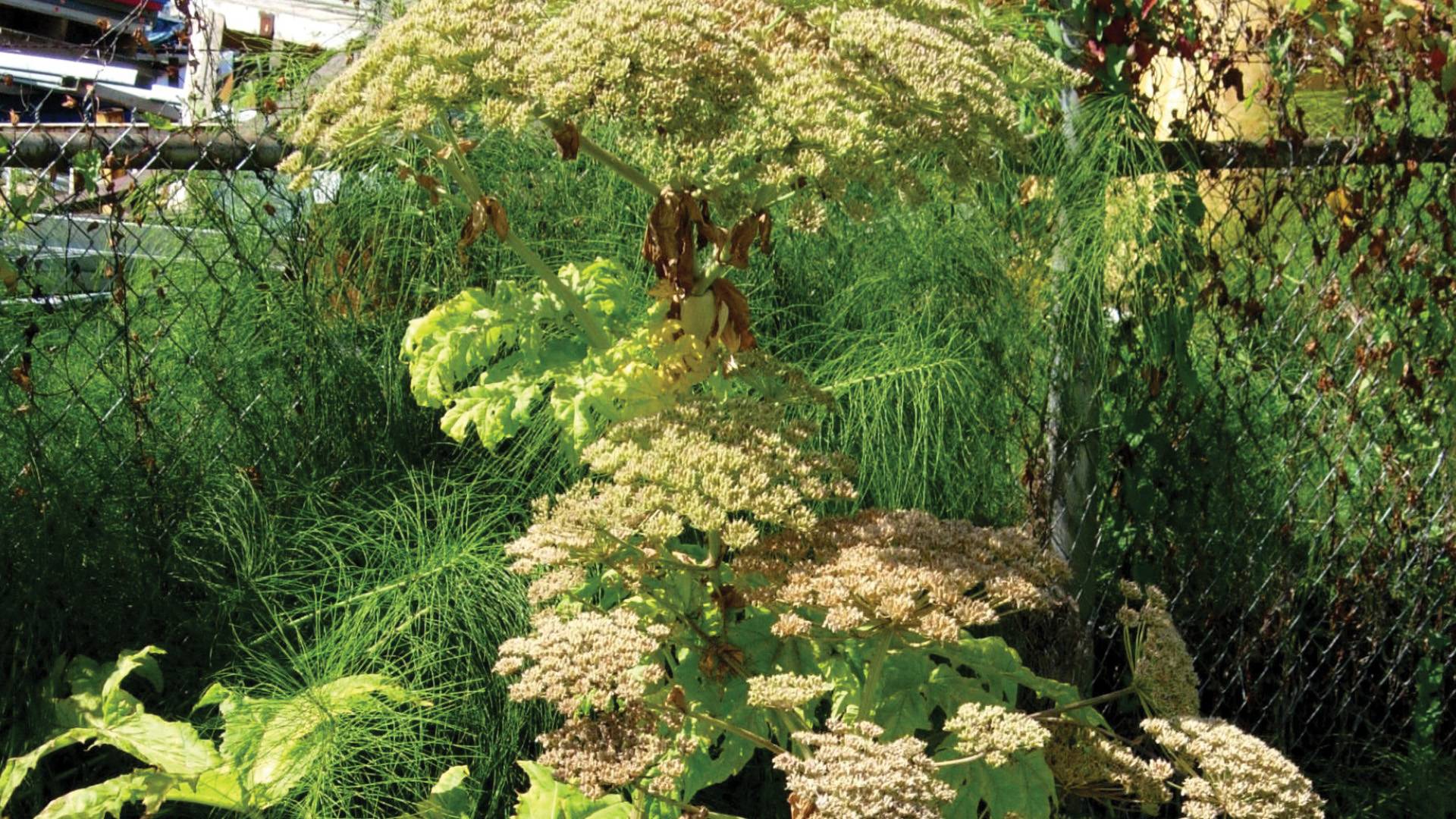
The plant thrives in areas that are moist to wet.
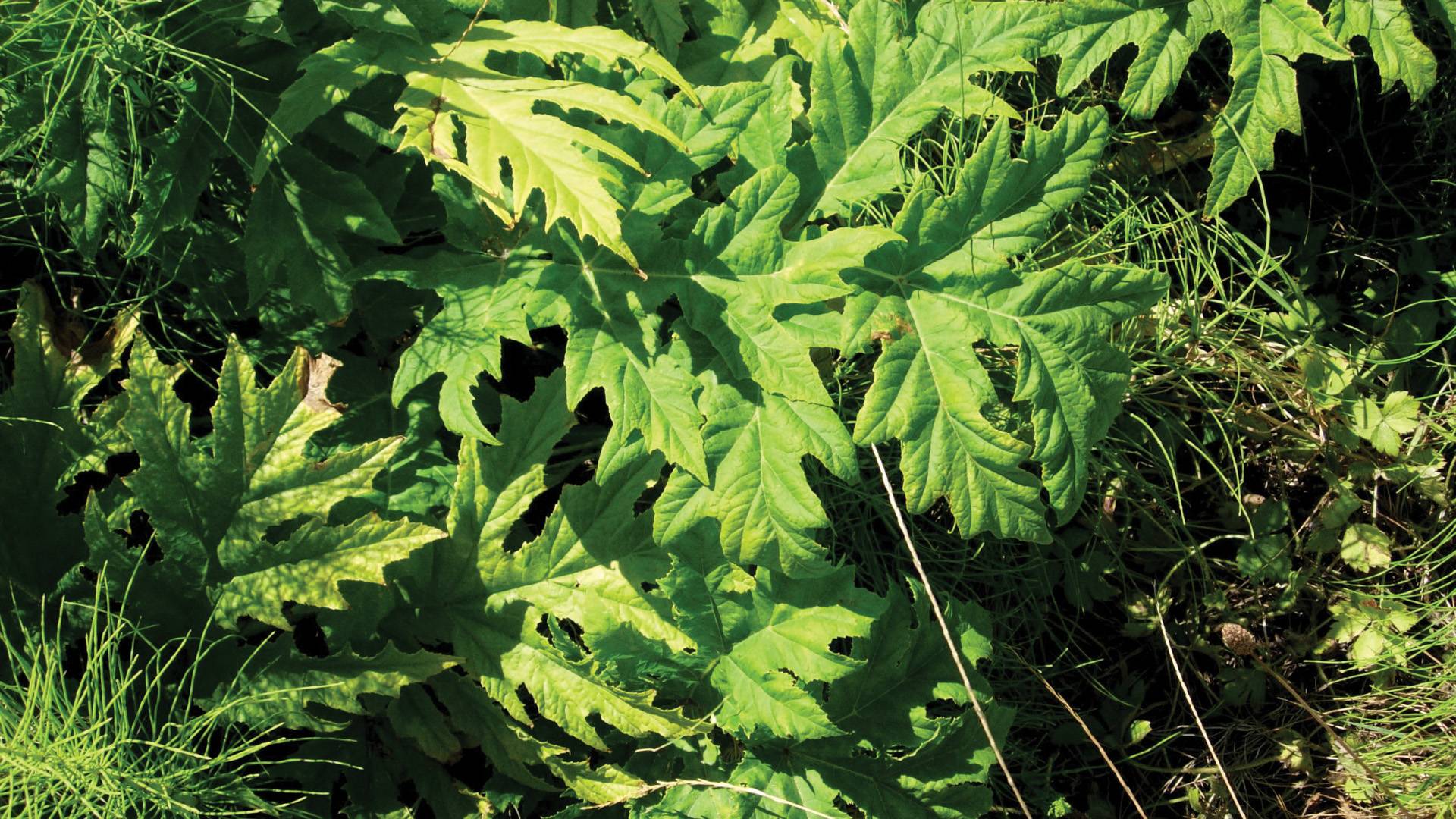
The leaves can be as much as 1.5 metres across.
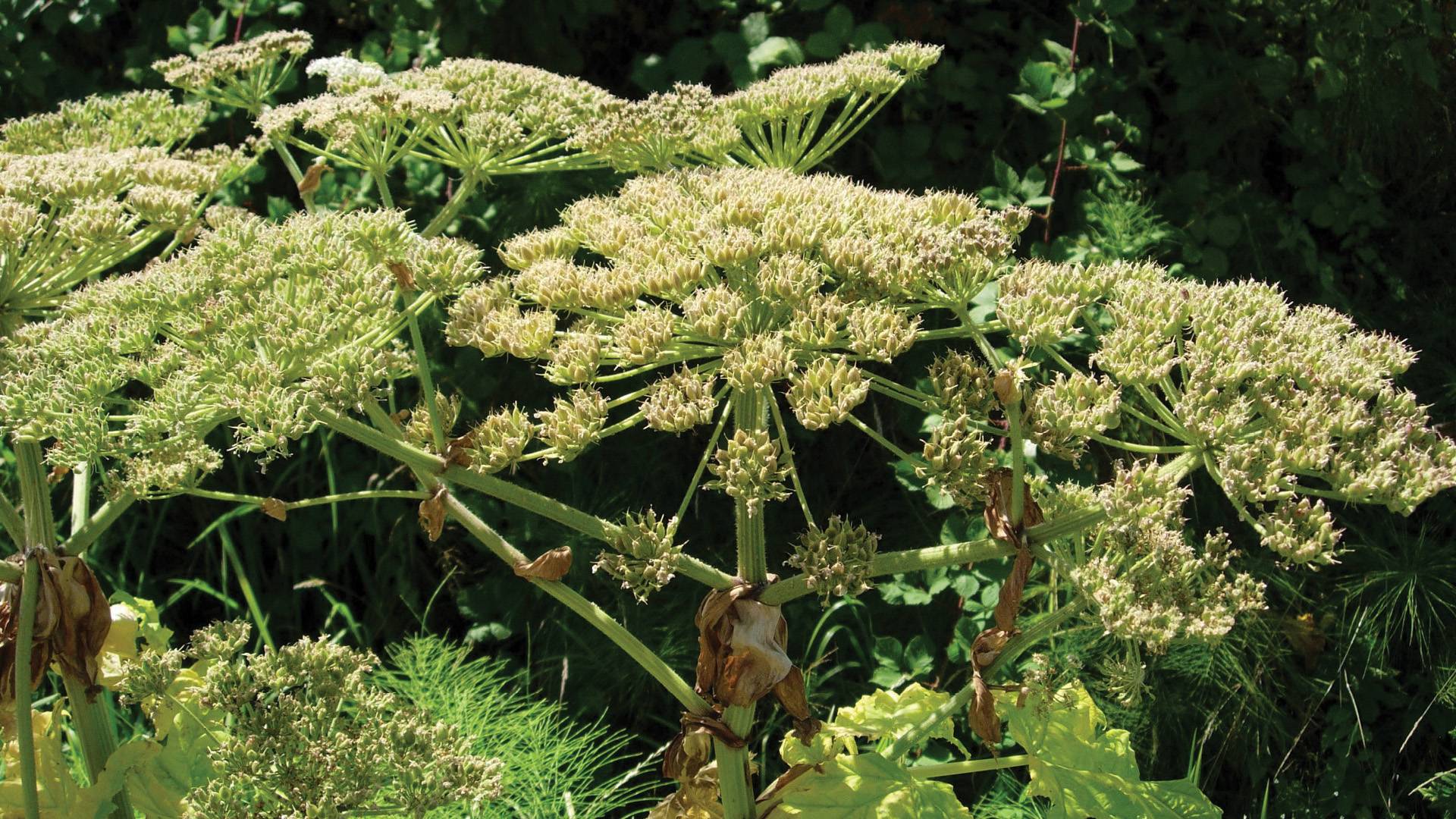
The plant blooms with large clusters of small white flowers.
Where is it found?
- Giant hogweed can be found throughout south and central Vancouver Island, the Gulf Islands, and the Lower Mainland.
- It thrives near streams, creeks, ditches, roads, and in vacant lots (areas that are moist to wet).
- It is not native to B.C. and was originally imported from Asia as a garden curiosity.
Which parts of the plant are poisonous?
The toxins are concentrated in the sap of the stalk, stems, and leaves.
What happens if I touch parts of the plant?
- The plant’s sap contains chemicals (furanocoumarins) that become toxic on contact with sunlight.
- This reaction can take place in as little as 15 minutes. But it can take many hours to see or feel the effects.
- The affected skin reddens and blisters. Two or three days later, the skin becomes inflamed.
- After a week, the affected skin darkens. This pigmentation can last for months or years.
How can I protect myself?
- Wear heavy, water-resistant gloves when handling the plants. Dispose of the gloves after use. (Heavy rubber gloves can be reused if carefully washed with soap and water). Don’t get any sap on your exposed skin.
- Wear water-resistant coveralls or clothing that leaves no skin exposed. Cotton, linen, and many synthetics soak up the plant sap, which can then penetrate to the skin. In one incident, a worker was burned by the sap through his clothing. Plant “hairs” may penetrate thin clothing.
- Wear goggles when disturbing or removing the plants, as small droplets of sap may be released into the air.
- Use caution when transporting waste containing the plants.
How do I apply first aid?
- After skin contact with sap, wash the skin carefully with soap and water.
- Keep the affected skin away from sunlight for at least 48 hours.
- If a rash or blistering develops, consult a doctor.
- Applying an anti-inflammatory cream (e.g., 0.5% hydrocortisone) may reduce skin irritation. These creams are available in most pharmacies.
- In the following months, cover affected areas of the skin with UV-protective clothing. When this is not possible, apply a broad-spectrum, water-resistant sunscreen with an SPF of at least 30. When affected skin is exposed to sunlight, apply sunscreen generously and reapply frequently.
- If sap gets into the eyes, flush with large amounts of water and use sunglasses with UV protection. Then consult a doctor.
2026-10-30 22:14:40