
Devil’s club
What is devil’s club?
- Devil’s club (scientific name: Oplopanax horridus) is a large plant in the ginseng family.
- It grows up to 6 m tall and has large (20 to 40 cm across), maple-shaped leaves.
- It produces small white flowers in spring and bright red fruits in summer. The fruits are poisonous to humans but are eaten by bears.
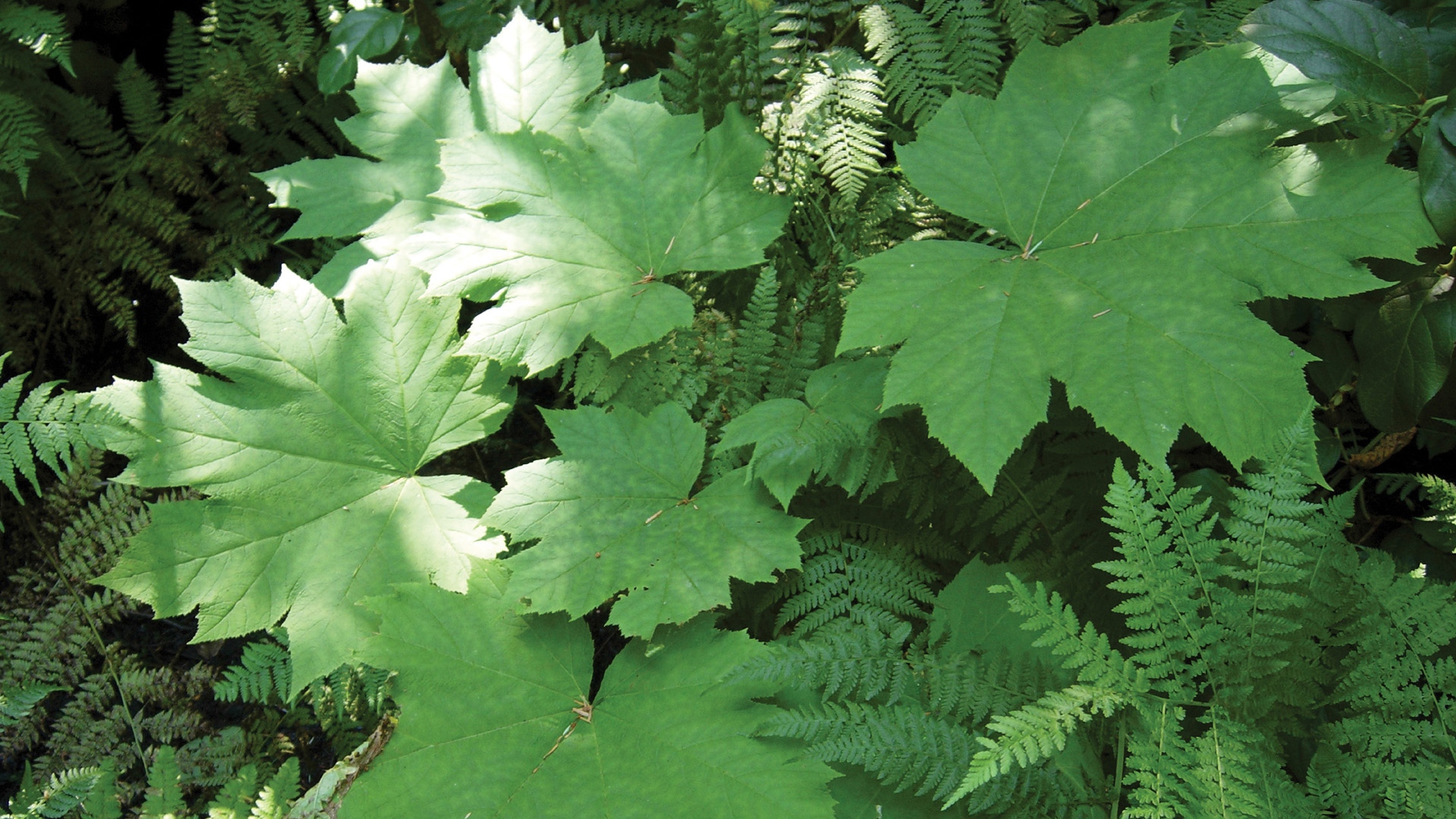
The leaves are maple-shaped and grow 20 to 40 centimetres across.
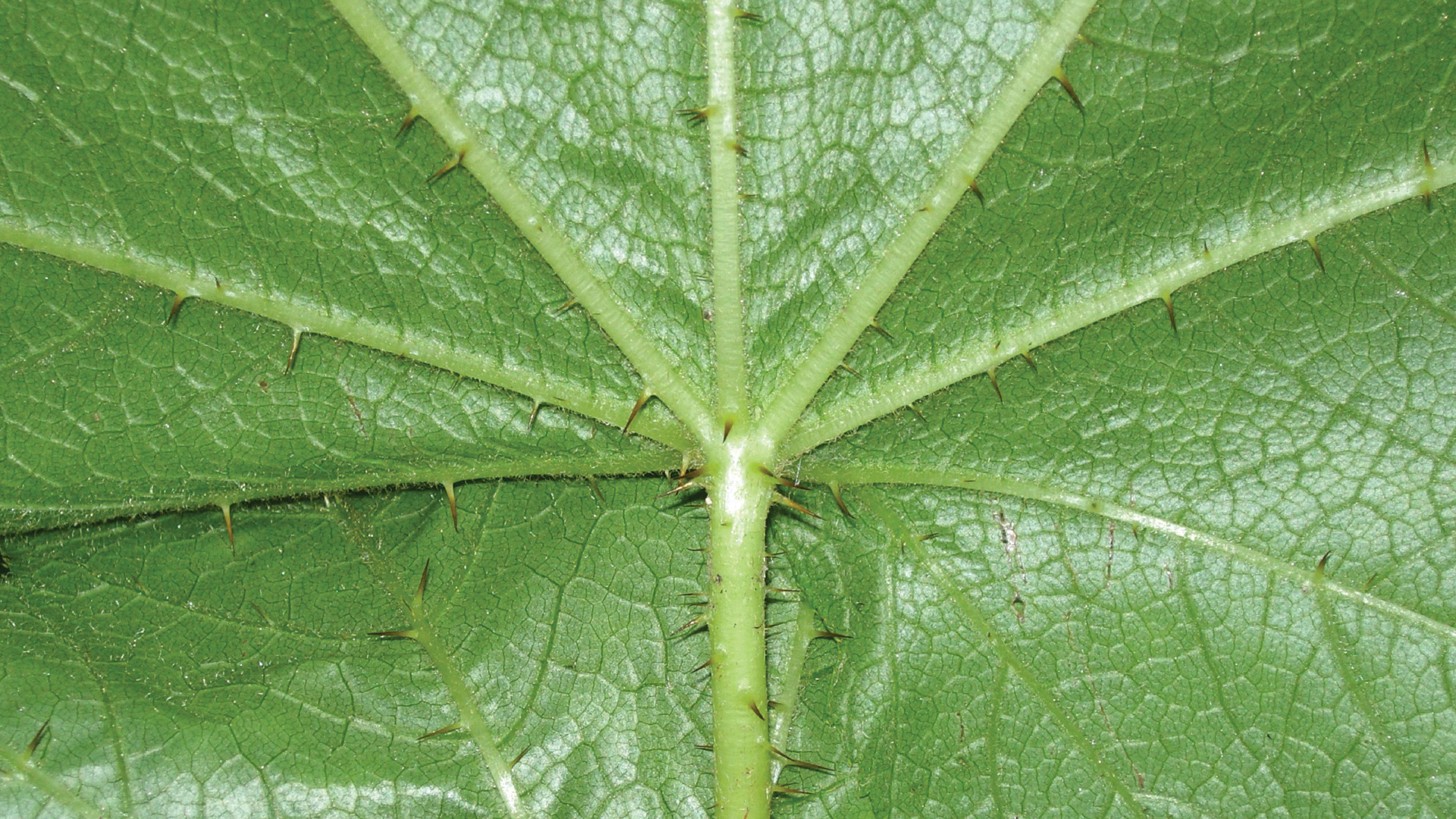
The undersides of the leaves have sharp prickles.
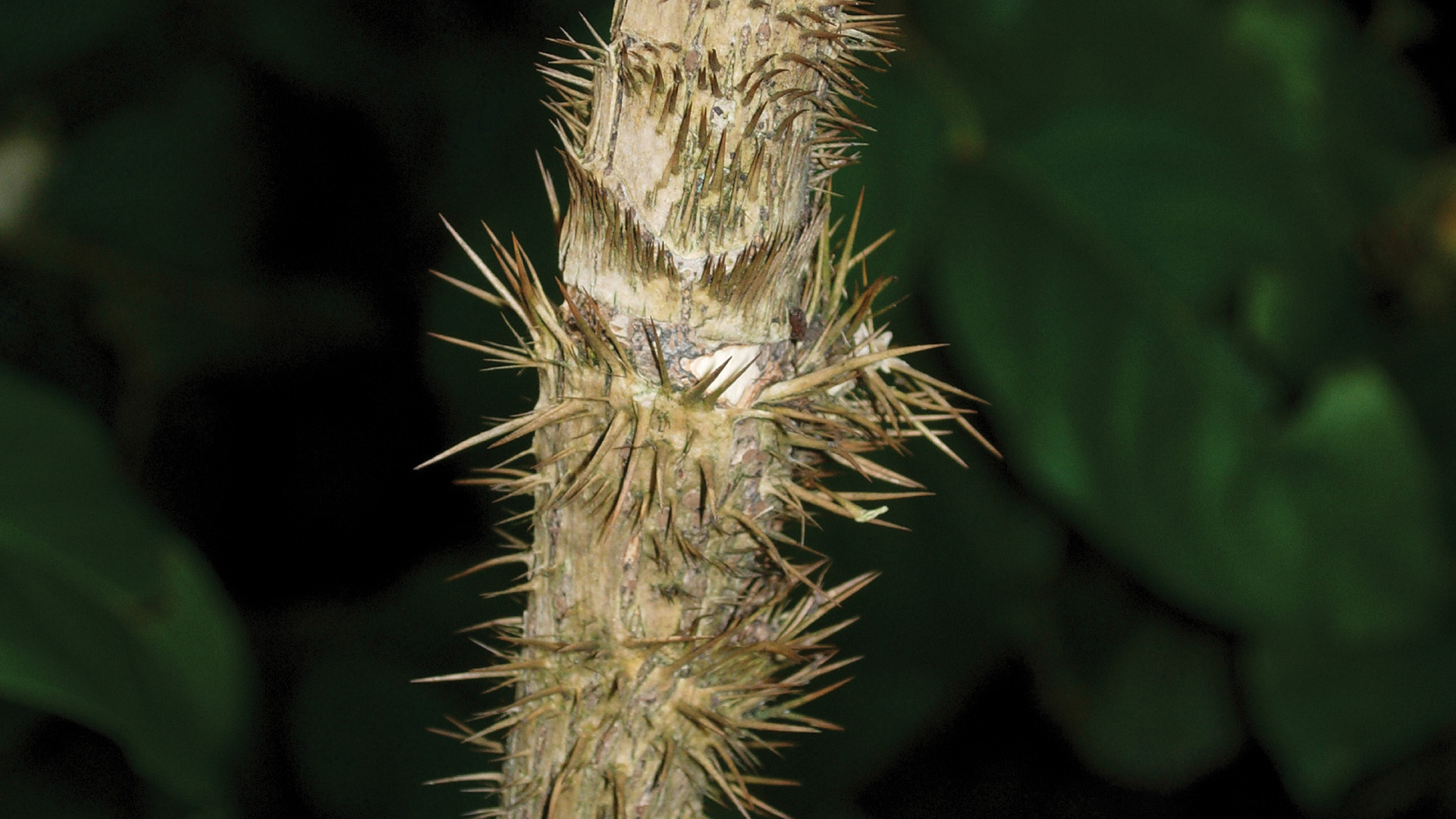
The stems have sharp prickles.
Where is it found?
- Devil’s club is native to British Columbia and found throughout the province. It is common in all regions except northeastern British Columbia.
- It thrives in moist woods and along streams, from sea level to over 1,500 m (the sub-alpine zone).
- Indigenous Peoples on the B.C. coast and in Alaska use the berries, roots, and inner bark for ceremonial and medicinal purposes.
Which parts of the plant are harmful?
- The stems and the leaves are covered with sharp prickles up to 2 cm long.
- The prickles can injure the eyes and skin. They can also cause serious allergic reactions in some people.
How can I protect myself?
- Wear long-sleeved shirts and long pants when working in areas where devil’s club grows.
- Wear protective goggles or safety glasses with side shields when walking through patches of brush higher than shoulder height.
- Wear heavy leather or canvas gloves when handling the plants.
How do I apply first aid?
- After skin contact, immediately remove the prickles with tweezers and wash the skin carefully with soap and water.
- Applying an anti-inflammatory cream (e.g., 0.5% hydrocortisone) may reduce skin irritation. These creams are available in most pharmacies.
- If a rash develops, consult a doctor.
- If prickles become stuck in the eyes, flush with plenty of water and seek emergency first aid.
2026-10-30 22:14:53