
Managing risks with a key risk inventory
Published on: June 8, 2026
A key risk inventory (KRI) is a simple, easy-to-read summary of the key risks on a worksite. Key risks are risks that could result in a serious injury, fatality, or disease. A KRI briefly describes each key risk, the risk controls currently in place, and whether those controls need to be improved.
By Michael Laycock
“A KRI is a valuable tool in an employer’s health and safety toolbox,” says Stacy Purewal, an industry and program specialist with WorkSafeBC. “It can help you understand and manage your most serious workplace risks in each area of the worksite.”
For each key risk, a KRI will help you:
- Identify who is at risk
- Make sure your control measures are effective
- Prioritize control measures for improvement • Keep track of who is accountable
- Orient and train workers
- Prevent injuries and diseases
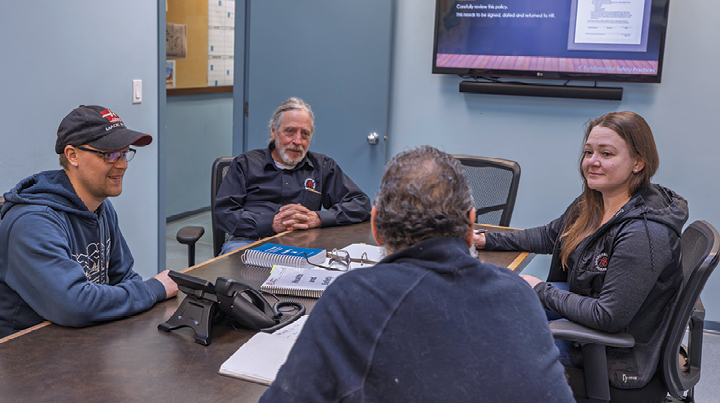
Putting together a KRI involves talking with your workers about the hazards and risks they face, Purewal says. Workers have first-hand knowledge from their experience on the job. By asking them a specific set of questions, you can identify issues that you may not already be aware of.
You should involve:
- New workers and experienced workers
- Supervisors
- Management
- Health and safety personnel
- The joint health and safety committee or worker health and safety representative
For each key risk, questions to ask include:
- What is the task or activity?
- What is unsafe, and who can get hurt?
- What control measures (both temporary and permanent) are in place now to prevent you and others from getting hurt?
- How could it be made safer? What should be done?
- Who is responsible for the control measures?
Document the answers to the questions. Our key risk inventory template can help with that, or you can create a record of your own.
A KRI can also prepare you for an inspection by a WorkSafeBC prevention officer. Having a completed inventory to share with an officer will show what you are doing to keep your workers safe.
“Preparing a KRI is a collaborative process, so make sure your workers know you welcome and value their feedback,” Purewal says.
Purewal gives an example of a manufacturing company that implemented a safety solution suggested by workers. After a worker’s hand was injured, the employer and workers looked more closely at the work task involved. The employer ended up reviewing its entire program for safeguarding, de-energization, and lockout. This included new written safe work procedures and training for everyone.
“I’ve enjoyed the reaction from employers when their workers share the nuances of performing tasks on the front line,” Purewal says. “Employers have used the KRI process as a catalyst to create preventive maintenance programs and to improve supervision, workplace inspections, and work area arrangements.”
Review and update your KRI from time to time, she adds, especially when you change a work process, purchase new equipment, or modify your control measures.
“A KRI is not complicated or an extra burden,” Purewal says. “Instead, it’s a useful, searchable snapshot of your key risks and controls. It provides written evidence that you’ve done your due diligence by actively managing risks at your workplace. And it’s a practical way to strengthen your health and safety program.”
For more information
Get started on your own KRI with this guide: Creating a Key Risk Inventory for Your Workplace: Engaging Your Workers to Help Manage Risks.
This article originally appeared in the Summer 2026 issue of WorkSafe Magazine.
To read more or to subscribe, visit WorkSafe Magazine.