
Building better safety together
Published on: June 8, 2026
A recent seminar challenged joint health and safety committees and worker health and safety representatives to move beyond compliance. The focus was on spotting risks early and building a culture of open, honest safety conversations.
By Marguerite Pigeon
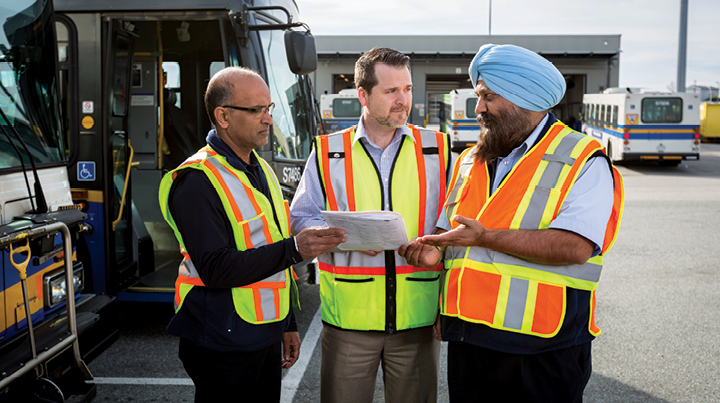
When employers and workers sit down together to talk about safety, they have a chance to do more than meet regulatory requirements. They can spot risks earlier, solve problems collaboratively, and strengthen a workplace culture where safety conversations lead to action.
That idea was front and centre at a recent seminar in Nanaimo. About 150 employer and worker representatives attended from many industries across B.C. They came together to rethink what effective joint committees can achieve.
Organized by WorkSafeBC, the event challenged participants to move beyond checking boxes and use their committees as a driver of health and safety.
“It’s more than compliance,” Will Dirksen, a manager in Prevention Services at WorkSafeBC, says. “When people genuinely care about safety committees, that’s where the gold is.”
The seminar combined teamwork, interactive challenges, and presentations from WorkSafeBC specialists. Dirksen wanted the event to feel fresh and engaging, but also a catalyst for change.
In the months since, Dirksen has been following up with participants. He asks a simple question: Have you tried anything new? His goal is to see more B.C. workplaces use their joint committee or worker health and safety representative as a proactive force for safety.
Spotting risks sooner
One strong step in moving beyond compliance is to develop a key risk inventory, says Dirksen. The inventory identifies:
- Each major workplace risk
- Its potential impact
- How it will be controlled
- Who is responsible for taking action
Excellence starts when joint committees approach this work collaboratively, says Shannon Corbeil, a WorkSafeBC industry and program specialist. “Committees that actively engage workers gain better insights and stronger buy-in.”
To foster dialogue and identify risks early, Corbeil recommends engaging workers across the organization in developing a key risk inventory. She describes worker health and safety representatives — and other engaged workers — as “champions of change.” These champions give voice to worker concerns, help identify appropriate controls, and support a shared sense of responsibility for workplace safety.
Learning from data
Joint committees can also strengthen workplace safety programs by using evidence to reduce workplace hazards more effectively. Statistics may sound dry but can be a powerful tool for prevention. Dirksen explains that data can reveal patterns and trends seen across similar workplaces in B.C. This helps committees to focus inspections and training where they’re needed most.
Seeing safety as a system
For WorkSafeBC ergonomists at the seminar, a systems approach to safety offers the clearest path to excellence. They included Jenny Colman, Tami Perkins, Sania Safari, and Geoff Wright. Their message was clear: Joint committees are more effective when they see workers as the centre of the system.
Workers understand workplace problems, Colman explains, and often have practical solutions. She describes a safe workplace as one where workers, management, and their work environment are aligned.
Turning incidents into insight
When injuries occur, joint committees can strengthen investigations by focusing on the underlying causes, says Wright.
A systems approach helps committees understand why things happened as they did and whether effective risk controls, such as engineering solutions, could have prevented the incident.
Involving workers in developing recommendations is also essential, he says. Colman agrees, noting that excellence in incident investigations comes from broad fact finding and learning, rather than placing blame on workers.
Why excellence matters
At its core, excellence in joint committees protects worker health and safety and, by extension, the health of B.C. communities, says Corbeil. From the outset, her presentation linked workplace safety to the personal lives people carry with them every day. Keeping that human impact in mind influences how committees assess risks, investigate incidents, and choose controls.
Brenda Moores, director of the BCFED Health & Safety Centre, also spoke at the seminar. “Workers are the backbone of this province,” she says. “When joint committees commit to teamwork, everybody wins.”
For Dirksen, the shift from compliance to excellence now feels within reach. Feedback from the seminar shows employers and workers valued the chance to come together and think more proactively about health and safety.
“Excellence is about caring,” he says. “It’s about working together for a common goal.”
For more information
Learn more about joint health and safety committees and access the Handbook for Joint Health and Safety Committees on worksafebc.com. You can also read our toolbox takeaway in this issue to learn how to create a key risk inventory.
This article originally appeared in the Summer 2026 issue of WorkSafe Magazine.
To read more or to subscribe, visit WorkSafe Magazine.