
Preventing falls from heights in construction
Published on: June 18, 2025
Falls from heights (e.g., roofs, ladders, work platforms) continue to be a leading cause of workplace injuries and fatalities. As summer kicks in and outdoor construction peaks, WorkSafeBC is urging employers to prevent these devastating and life-altering incidents.
By Michael Laycock
From 2020 to 2024, there were more than 5,400 injury claims in the construction sector from falls from heights, including almost 1,900 serious injuries and 35 fatalities. More than 1,000 construction workers were injured due to falls from heights in 2024 alone. That’s nearly three a day.
To help reduce these risks, WorkSafeBC is continuing its proactive, unannounced inspections at construction worksites across the province. These inspections focus on ensuring fall protection measures are in place and that employers are effectively managing the most significant risks to workers.
Employers must ensure that workers are trained to use fall protection equipment and understand the procedures.
“Proper planning, training, and supervision, along with compliant and proper use of fall protection equipment, can significantly reduce the risk of falls from heights,” says Kathy Tull, industry and program specialist with WorkSafeBC. “These precautions, which are outlined below, can also help employers ensure compliance.”
1. Plan the work
As a construction employer, you can’t always avoid working at heights, but you can minimize or eliminate the chance of falls occurring. Planning for safety is an essential part of preventing falls. Before working at a height, always plan your work and then work your plan.
We’ve created a fillable template and a companion guide you can use to help create your own fall protection plans. The template can help you:
- Navigate the planning process
- Address site-specific conditions
- Demonstrate due diligence
- Instruct workers
- Choose fall protection systems
2. Train and supervise workers
Before allowing a worker into a fall-hazard area, ensure the worker is trained in the fall protection system for the area, is using proper fall protection equipment, and understands the procedures to follow.
Ongoing supervision of your workers is a key part of keeping everyone safe when working at heights.
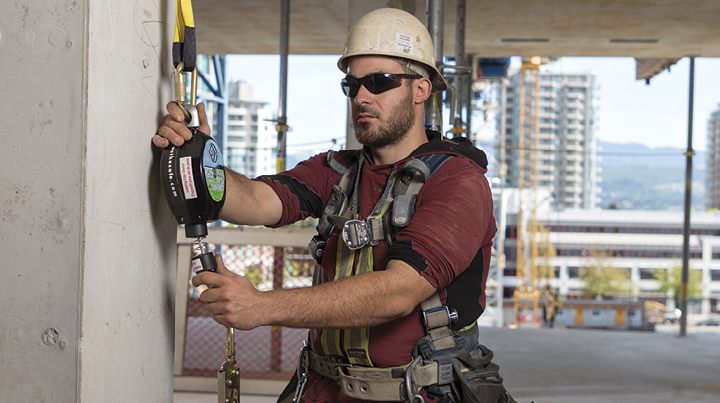
3. Ensure compliant, proper use of fall protection equipment
Fall protection systems must be used when either of the following applies:
- A worker could fall 3 m (10 ft.) or more
- A fall from a lesser height may result in a serious injury
Consider fall protection systems in the following order:
- Guardrails that are properly constructed, built as a system, and appropriately attached to a structure
- Fall restraint, a system that prevents a worker from falling from a work position or an unguarded edge
- Fall arrest, a properly designed system that stops a worker’s fall before they hit the surface below
- Other procedures acceptable to WorkSafeBC (only if you’ve considered the first three options and none are workable)
Depending on the site conditions, you may need to use multiple systems (e.g., guardrails on balconies and fall arrest systems on the roof). On an ongoing basis, ensure workers continue to properly inspect and use fall protection, and follow the manufacturers’ instructions for the equipment.
For more information
To download the fall protection template and guide, visit the Falls from elevation webpage on worksafebc.com.
This information originally appeared in the Summer 2025 issue of WorkSafe Magazine. To read more or to subscribe, visit WorkSafe Magazine.