
Preparing for winter roadside emergencies
Published on: January 21, 2026
For workers who drive on the job, getting stuck, stranded, or delayed can be challenging at the best of times. But in winter, these roadside emergencies can be life-threatening, especially for workers who drive alone or in remote areas.
By Michael Laycock
The causes can range from poor road conditions and crashes to mechanical failures and avalanche clearing. Whatever the cause, these emergencies can expose workers to passing vehicles, extreme cold, carbon monoxide, wildlife, and other hazards.
“Roadside emergencies definitely happen,” says Trace Acres, program director for Road Safety at Work. “And a lot of highway maintenance contractors will tell you they see people stranded who are simply not prepared for the conditions.”
Preparation is the key to reducing the risks for workers, Acres says. In fact, as an employer, you have a legal responsibility to prepare your workers for roadside emergencies.
The first step in managing risk is to identify the hazards and assess the risks they present (i.e., the likelihood and potential severity), Acres explains. This will point you toward the right safety measures (or controls) to reduce the risks.
Put in place effective controls
Acres says examples of effective controls include:
- Decide if a road trip is necessary. (If severe weather is in the forecast, could the trip be rescheduled? If not, is another, safer route possible?)
- Ensure vehicles are inspected regularly, well maintained, and equipped with winter tires with at least 3.5 mm tread depth.
- Plan trips with scheduled check-ins and clear communication methods.
- Ensure workers bring appropriate winter clothing and boots.
- Equip vehicles with emergency supplies (e.g., blankets, food, flares, communication devices, shovels, sand).
- Provide workers with education in roadside emergency procedures.
Educate workers to be prepared
Educate your workers to:
- Keep vehicle fuel tanks at least half full, and top them up often, or charge EV batteries fully before setting out.
- Charge their phones and carry charged power banks.
- Check DriveBC and weather forecasts before trips. If road conditions ahead are poor, delay the trip until they improve. If the trip must proceed, follow the plan for communication and check-ins.
- Complete pre-trip inspections and carry emergency kits.
What workers should do in an emergency
In an emergency, workers need to:
- Know who to contact (911, the nearest towing company if needed, and the check-in contact or the employer). In bad weather, be prepared to wait several hours for help to arrive.
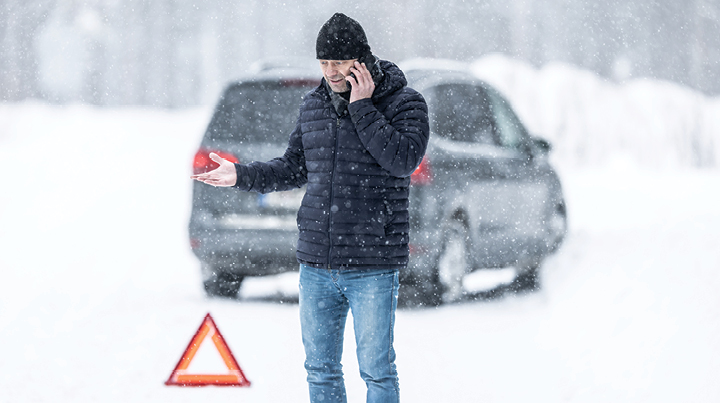
- Activate the vehicle’s hazard lights, put out cones or emergency triangles, and wear high-visibility clothing to reduce the risk of being struck by other vehicles.
- Know when to stay in the vehicle and when to leave it.
On that last point, workers need to consider their options and weigh their personal safety risks.
“It depends where your vehicle is,” Acres says. “If it’s safely off to the side of the road, staying in the vehicle is the best bet. But if it’s on a blind corner or in the path of passing vehicles, move it to a safer spot if you can. If you can’t, think seriously about leaving the vehicle, moving a safe distance away, and flagging down help.”
If you do stay with your vehicle, take precautions.
“If you’re in your vehicle with the engine running, make sure the tailpipe isn’t plugged with snow, and open a window slightly to get fresh air,” Acres says. “If it’s snowing, brush snow off your vehicle and your emergency triangles now and then to help other drivers see you.”
As an employer, if your firm has experienced any roadside incidents, review them and implement corrective actions so you can improve your safety measures. Conduct a thorough review at the end of winter while lessons learned are still fresh in mind.
For more information
Visit roadsafetyatwork.ca to learn more about its Winter Driving Safety campaign. Find out more about managing cold stress on worksafebc.com.
This article originally appeared in the Winter 2025 issue of WorkSafe Magazine.
To read more or to subscribe, visit WorkSafe Magazine.