
Worker on top of foundation wall tripped and fell, sustained fatal injuries
Date of incident: March 2022
Notice of incident number: 2022183340004
Employers: Forms rental company; general contractor (as prime contractor)
Incident summary
A worker from an equipment rental company went to a residential construction site to pick up pallets of form panels that had recently been used to pour a concrete foundation. No other workers were on site. After securing the mobile crane’s lifting straps to a pallet of forms, the worker was standing on the top of a poured concrete wall while operating the mobile crane to move the pallet to a truck. The worker fell approximately 1.8 m into the foundation, sustaining fatal injuries.
Investigation conclusions
Cause
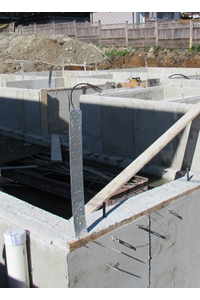
- Mobile crane operator tripped and fell into foundation. The tops of the foundation walls had rebar and earthquake straps protruding from them. Earthquake straps are metal bands used to tie a building’s wooden structure to its concrete foundation to enhance stability. Water had accumulated in several areas of the foundation. While monitoring the movement of the load, the worker started to walk forward on the concrete wall, caught his foot on an earthquake strap, lost his balance, and fell into the foundation. He was discovered deceased approximately 50 minutes later.
Contributing factors
- Lack of safe access to work area. The concrete foundation was designed without safe access to the area within the walls where the worker was required to perform his work. The worker was standing on top of the foundation walls in order to access the work area. The prime contractor (the general contractor) did not provide workers with a safe way to enter and leave the work area.
- Failure to identify hazards in the workplace. During site inspections in the week leading up to the incident, the prime contractor did not identify the tripping hazards created by the earthquake straps and rebar that extended from the top of the poured concrete foundation walls. The prime contractor also did not identify the hazard created by the lack of safe access to the work area.
- Lack of new worker orientation. Because the worker had not been on the worksite since the foundation walls were poured, and the hazards at the site had changed substantially since that time, he was considered a worker new to the workplace. The prime contractor did not perform a new worker orientation to inform the worker of the new hazards at the worksite, emergency procedures, and all other health and safety protocols for the worksite.
- Prime contractor failed to maintain safe worksite. The worker was the only worker on site and was performing both the rigging of the pallets and the operation of the mobile crane. In allowing the worker to perform both tasks, the firm that employed him failed to comply with the Occupational Health and Safety Regulation regarding crane operation. For its part, the prime contractor did not comply with the Workers Compensation Act and the regulations applicable to the workplace. It did not identify workplace hazards, maintain a safe workplace, and ensure the health and safety of workers at the workplace.
2021-04-22 20:42:33