
Two tower cranes collided
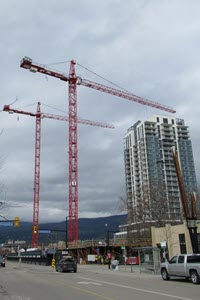
Date of incident: March 2022
Notice of incident number: 2022158880003
Employers: Formwork company; crane service company
Incident summary
At a highrise construction site, two tower cranes were being used to move materials around the workplace. An overlap zone (a space in which it is possible for the jibs of both cranes to be present at the same time) had been identified, and both cranes had been equipped with an anti-collision control (monitoring) system to prevent contact between the cranes. At the time of the incident, one crane (crane 1) moved while the other crane (crane 2) was stationary in the overlap zone. Then the operator of crane 1 realized that crane 1 had entered the overlap zone, and he attempted to switch the direction of the crane’s movement. The crane slowed but did not change direction. Crane 1’s jib contacted crane 2’s load line and then began to move away from crane 2. No workers or other persons at or near the workplace were injured.
Investigation conclusions
Cause
- Incorrect electrical wiring of crane 1’s monitoring system. Crane 1’s monitoring system had been incorrectly installed by the crane service company. The manufacturer’s original electrical panel on crane 1 had been previously replaced, and the wiring no longer matched the electrical diagram on crane 1’s counter-jib. A technician then failed to recognize that the electrical panel had been replaced, and the monitoring system was connected as though it was the original manufacturer’s panel. As a result of this incorrect wiring, crane 1’s monitoring system was not interfacing with crane 1 as designed.
Contributing factors
- Lack of communication of operators’ intention to move cranes into overlap zone. Neither of the crane operators communicated to the other (via radio) the intention to move their respective cranes into the overlap zone. That communication was required by the written safe work procedures of their employer (the formwork company). As a result of the lack of communication, neither crane operator was aware of the other crane working in the overlap zone.
- Crane 1 moving too fast. Crane 1 was being slewed counter-clockwise in 2nd gear, and it entered the overlap zone at an unsafe speed. The monitoring system is intended to control the speed of a crane while entering the overlap zone — and to stop the crane if necessary — when the crane is operating at a speed no higher than step 1 (equivalent to 1st gear).
- Incorrect installation of monitoring systems on cranes 1 and 2. On crane 1, the electrical panel was not the correct panel for the crane as per the manufacturer’s specifications, and therefore the monitoring system did not properly interface with the crane. The incorrect installation of the monitoring system interfered with the operator’s input to control the crane while it was slewing counter-clockwise. On crane 2, the monitoring system was incorrectly wired into the electrical panel; this caused four power failures of crane 2 before the incident. In the days that followed the incident, the crane service company identified the electrical issue with crane 2 and directed crane 2’s operator to correct the wiring issue even though he was not qualified to do the work (as per the manufacturer’s installation manual).
- Failure to ensure monitoring systems certified by professional engineer. The installation of the monitoring systems on cranes 1 and 2 constituted a modification to the control system of the cranes. The Occupational Health and Safety Regulation requires such modifications to be assessed and certified by a professional engineer, which neither the formwork company nor the crane service company had done.