
Loader backed up, fatally injuring worker on foot
Date of incident: January 2022
Notice of incident number: 2022145570001
Employer: Municipal government
Incident summary
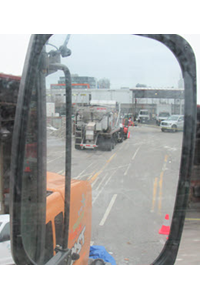
A front-end loader at a city works yard reversed and struck a salt truck operator who was on foot behind a salt truck. The salt truck operator was caught between the loader and the salt truck. The salt truck operator sustained fatal injuries.
Investigation conclusions
Cause
- Worker caught between equipment when work procedures not followed.
- The accepted work procedure was for salt truck drivers to stop prior to entering the area for loading and unloading salt. Drivers were then to make eye contact with the loader operator working in that area and await direction from the loader operator before proceeding. The salt truck operator drove into the area behind the loader without stopping or making eye contact, parked the truck, got out, and stood behind it.
- The loader operator did not take adequate steps to ensure that the area around the loader was clear before reversing. The employer’s work procedures for operating mobile equipment and the manufacturer’s operating instructions required operators to be aware of their surroundings and to ensure the area was clear of pedestrians or equipment. The loader operator reversed four times while the salt truck operator was behind the loader but was not aware of the salt truck operator’s presence. The loader was equipped with mirrors and a backup camera. However, the employer did not ensure that workers operating mobile equipment took adequate steps to verify that the area around the equipment was clear before moving the equipment.
Contributing factors
- Inadequate documentation of work procedure for unloading salt. The employer had a diagram of traffic flow demonstrating the work procedure for unloading salt, but there was no accompanying description of how to safely complete the associated work tasks (e.g., make eye contact with the loader operator and wait for a signal before proceeding). Although the workers who were interviewed had a clear and consistent understanding of the work procedure, the lack of a clearly articulated, written safe work procedure may have contributed to the workers not following the steps required to perform the work safely.
- Inadequate control measures in place. There was no spotter or traffic control person in place to reduce the risk of collisions between mobile equipment and other equipment or pedestrians. Communication between salt truck drivers and loader operators was reliant on visual cues and required workers to be familiar with undocumented elements of the work procedure. The employer should have had controls in place (such as a traffic control person or established procedures for visual cues or the use of radio communication) to reduce the likelihood of incidents occurring due to issues such as congestion, poor visibility, workers on foot around mobile equipment, or workers not adhering to administrative controls.
- Inadequate training and supervision of loader operator.
- Loader operators require 160 hours of loader operation for certification. At the time of the incident the employer did not have a documented procedure for training loader operators, nor any documentation regarding the details of the loader operator’s training as a loader operator.
- The employer failed to provide adequate training and supervision to ensure that the loader operator was operating the loader safely.
- Inadequate hazard identification and risk assessment. The employer did not carry out a formal hazard identification and risk assessment for the work of loading and unloading salt. No job hazard analyses or field-level hazard assessments were documented. The lack of adequate hazard identification and risk assessment reduced the ability to create effective procedures to ensure the work was carried out safely.
2021-04-22 20:42:33