
No workers injured when key fob triggered explosion in service vehicle
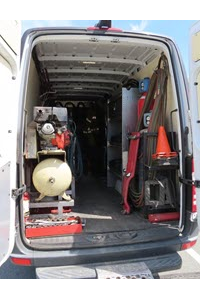
Date of incident: July 2023
Notice of incident number: 2023167730013
Employer: Auto repair company
Incident summary
An auto repair worker was walking
toward his mobile service vehicle, which contained an oxyacetylene welding
system, to start work for the day. When he was approximately 10 m to
12 m (32 ft. to 39 ft.) away, he clicked a button on the key
fob to unlock the vehicle remotely. The vehicle immediately exploded and burst
into flames. No one was injured in the explosion; however, surrounding
vehicles and property were extensively damaged.
Investigation conclusions
Cause
- Unventilated vehicle exploded when flammable gas(es) were ignited by spark triggered by key fob. The oxyacetylene system was stored unsafely inside the service vehicle, and acetylene and/or oxygen were released into the enclosed space overnight. The oxyacetylene system was shut off the night before, but the hoses were not disconnected, and safety caps were not put on the compressed gas cylinders as required by the Occupational Health and Safety Regulation for the storage of hazardous substances. Gasoline from other stored equipment may also have evaporated and contributed to the fuel-air mixture in the vehicle. When the worker unlocked the vehicle remotely, a spark from the vehicle’s electrical system ignited the accumulated gas(es) and caused the vehicle to explode.
Contributing factors
- Inadequate storage of hazardous substances. Leaving the oxyacetylene system’s regulator gauges and hoses connected to the compressed gas cylinders, and storing the cylinders without the manufacturer’s safety caps in place or without the installation of integral valve guards, allowed one or both of the hazardous acetylene and oxygen gases to leak and accumulate inside the vehicle.
- Lack of hazard identification and safe work procedures. The worker’s employer did not have any type of procedure to identify hazards or assess and mitigate the risks that its workers were regularly exposed to, and did not make safe work procedures available to workers with regard to the use and storage of hazardous substances. In addition, the employer did not take appropriate steps to make workers aware of all known or reasonably foreseeable hazards at work.
- Lack of ventilation in modified vehicle. The vehicle’s cargo area had been modified to store and travel with an oxyacetylene system. Despite the employer’s awareness of the hazardous substances in its fleet of service vehicles, no additional ventilation was installed in the vehicles prior to the incident. The vehicle involved in the incident had poor ventilation to the outside when the windows and doors were closed.
- Inadequate information, instruction, training, and supervision. The employer did not provide adequate information, instruction, training, and supervision to its workers to ensure their safety while handling the hazardous substances that were required to do their work. The worker had not been trained or instructed to disconnect the acetylene and oxygen cylinders’ regulator gauges and replace them with the manufacturer’s safety caps as required when the cylinders were not connected for use.
2021-04-22 20:42:33