
Deckhand drowned after falling overboard in rough seas
Date of incident: March 2020
Notice of incident number: 2020182750010
Employers: Longline fishing firm; vessel master
Incident summary
Two deckhands were on the open deck of a commercial fishing vessel processing fish. It was windy and getting dark, and seas were rough. One of the deckhands (Deckhand 2) left to take a bin of fish down to the freezer below deck. While he was gone, the other deckhand (Deckhand 1) fell overboard into the water. Deckhand 1 was not recovered for several hours and was fatally injured.
Investigation conclusions
Cause
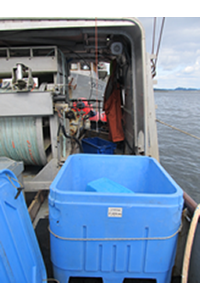
- Deckhand 1 thrown overboard in rough seas. Deckhand 1 was thrown overboard, likely while lifting a heavy plastic tote lid onto a tote (a large bin). The incident was unwitnessed and the exact cause of Deckhand 1’s fall is not known.
Contributing factors
- Challenging sea state. Had the waters been calm it is unlikely Deckhand 1 would have gone overboard. The rough seas and high winds contributed to the incident.
- Worker not reported missing. There was no system in place to alert the master or Deckhand 2 that Deckhand 1 had gone overboard. Consequently, rescue efforts were not initiated until approximately 20–30 minutes after Deckhand 1 fell off the vessel, when his absence was noticed. Deckhand 1 may have been unable to summon help. Being immersed in cold water for a significant amount of time can have serious, often fatal, consequences.
- Lack of risk assessment for work environment and work activity. Although the crewmembers were familiar with fishing, the vessel was new to them and had characteristics that differed from those of previous boats they had worked on for the employer. The gunwales in Deckhand 1’s work zone were low and unguarded, and the vessel had a tendency to “whip” itself upright when rolling in choppy water. If a hazard identification and risk assessment of the vessel and the work processes had been completed, the master might have noted the need for additional controls (such as a higher barrier above the gunwales in the work zone) and put them in place.
- Lack of supervision. To ensure that workers are adequately supervised, employers must identify hazards in a workplace and eliminate or control them. In the fishing industry, both firms and masters may have responsibilities as employers. These obligations include ensuring the health and safety of crewmembers while they are working on a vessel. Firms must have a safety program or system of accountability in place for masters, to ensure that risk assessments and drills are carried out, training and instruction is provided, and the requirement to don lifejackets is enforced. And firms must adequately supervise masters of vessels by verifying that they are complying with the Occupational Health and Safety Regulation so as to ensure the health and safety of crewmembers. In this case, none of the above requirements was met.
Other safety issue
- Failure to ensure lifejacket was used. The Regulation requires employers to ensure that fishing crewmembers don lifejackets when on deck. This requirement was not met.
2021-04-22 20:42:33