
Arborist sustained fatal injuries while attempting to top tree
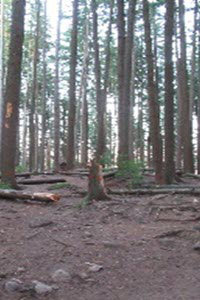
Date of incident: September 2022
Notice of incident number: 2022184470047
Employers: Tree services company; municipal government
Incident summary
An arborist was removing trees in a public park. He climbed a 40 m (130 ft.) tree that was marked for removal in order to top it. Immediately after the arborist felled the top of the tree, the base of the tree snapped, and the tree fell. The arborist was tied into the stem of the tree and fell with the stem to the ground. He sustained fatal injuries.
Investigation conclusions
Cause
- Arborist climbed dangerous tree and rotten base of tree snapped. The structural integrity of the tree the arborist climbed was compromised due to excessive decay and rot at its base. As a result, when the arborist attempted to remove the top portion of the tree — which was not rotten — the weight of the top portion, as it was falling, put excessive pressure on the rotten base of the tree. This pressure caused the base to snap and fall.
Contributing factors
- Arborist not trained to fall trees. Although the arborist was trained and certified in many other aspects of tree service work, he was not a certified tree faller and had not been trained to a standard acceptable to WorkSafeBC. Before the incident, he had attempted to fall another tree, but he encountered several difficulties. After the difficulties he encountered while attempting to fall that tree, and because he was not trained to fall trees, the arborist chose to top the tree involved in the incident rather than hand falling it, even though he knew that it was rotten.
- Inadequate dangerous tree assessment for climbing. The tree the arborist climbed was a dangerous tree and the integrity of the tree was compromised. The employer did not ensure that the arborist completed a proper tree assessment and climbing plan.
- Ineffective and incomplete safe work procedures. The employer had safe work procedures (SWPs) for falling and tree climbing. However, both SWPs were inadequate for the tasks of tree falling and topping trees. In addition, the SWPs were not followed by the arborist or the employer.
- Inadequate new worker assessments. The employer’s process to assess the competencies of workers conducting high-risk activities such as tree falling was based on a misunderstanding of the requirements. The employer relied on its workers having the International Society of Arboriculture arborist certification, which is not recognized by the Occupational Health and Safety Regulation as a falling training standard acceptable to WorkSafeBC. The limited new worker assessments that were conducted by the employer involved other tree service activities and not tree falling. The employer did not recognize that the arborist did not have adequate training and experience to fall dangerous trees in a safe manner.
- Ineffective supervision. The employer did not ensure that the arborist was properly supervised during the high-risk activity of falling trees, including dangerous trees, or that he was conducting tree risk assessments and documenting tree-climbing plans in preparation for tree topping. The employer did not have an effective system of supervision, which ought to have considered all high-risk tasks and activities, including hand falling.
- No inspection of assigned high-risk activities. The municipality that contracted the employer to perform the tree falling did not ensure that the work being done on the day of the incident was performed by qualified and certified tree fallers. The municipality did not have a formal system or process for workplace site inspections or post-work inspections to ensure the health and safety of other workers conducting high-risk activities for it.
data-bs-keyboard="true">
2021-04-22 20:42:33