
Four workers injured by explosions in wood pellet plant
Date of incident: November 2020
Notice of incident number: 2020182060142
Employers: Wood pellet manufacturer
Incident summary
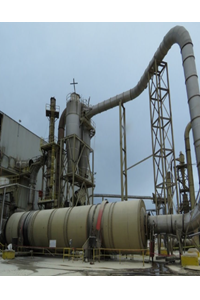
At a wood pellet production plant, several workers were troubleshooting an upset condition in the dryer system. This troubleshooting process included restarting the natural gas burner. Near a dilution zone of the plant’s burner, a pocket of combustible gas ignited, resulting in an explosion. The combustion wave continued within the ducting, igniting combustible dust, which caused several other large explosions. Four workers who were working in the area of the explosions — three railcar loaders and a millwright — were injured.
Investigation conclusions
Cause
- Ambient air and accumulation of combustible gas. An unknown and unplanned accumulation of combustible gas occurred in the burner’s zone 3, which is in the vicinity of the dryer inlet stack. The investigation could not determine the exact cause of the accumulation of combustible gas; what type of combustible gas was responsible for the initial deflagration; or whether it was a combination of gases including natural gas and syngas. There may also have been combustible dust within the mixture. Oxygen was admitted into the area downstream of the burner from multiple cracks and compromised seals. The purge cycle was incomplete (5 minutes instead of the usual 8 minutes) and did not remove all the residual gas from the shutdown of the burner. The accumulated combustible gas ignited, resulting in a flame erupting out of the dryer inlet stack followed by an explosive pressure wave and flame front, which led to a series of combustible dust explosions throughout the dryer and twin cyclones.
- Inadequate investigation of upset condition in process system. A series of signs — increased amps drawn from the induced-draft fan, the lifting of the dryer inlet stack lid, the steam coming from the dryer inlet and outlet skirts, and the unexplained temperature increases — were negatively affecting the process system. An unplanned partial shutdown was implemented to reset the automation controls. The employer restarted the burner without conducting a thorough investigation into what was causing the uncontrolled temperature spikes and positive pressure events.
Contributing factors
- Lack of written procedures for partial shutdown. The employer did not have a procedure for workers to follow in addressing an upset condition. Differences in how operators interacted with the human-machine interface (HMI) system may have aggravated the condition of the process leading up to the deflagration in the dryer inlet stack. When the burner was restarted on the day of the incident, unusually high temperatures were occurring in the burner and the dryer outlet. The induced-draft fan that circulates air to cool the system had been increased, which allowed ambient air (oxygen) and possibly embers from the burner to be exposed to the accumulation of combustible gas and contributed to its ignition.
- Poor communication. Access to the area affected by the upset condition was restricted but this was not communicated to workers who were not troubleshooting the upset condition. Because of the infrastructure and physical barriers, the locations of the three railcar workers were not known to the workers trying to resolve the upset condition. As a result, the railcar workers were working in the area of the upset condition when the burner was reignited and were exposed to the effects of several explosions.
- Lack of management of change for aging infrastructure. The plant was constructed in 2006. Since that time, there had been a major design and infrastructure change when the trunking from an energy plant was disconnected, and fibre was discontinued as a fuel source for the burner. As the plant aged, equipment and ducting were subject to heat and wear. Components and hatches became worn and warped, creating points where ambient air could enter the system and oxygenate the process gas. Several upgrades and procedural changes were made due to near misses and incidents without analyzing proposed changes and their effects to identify and control new hazards created by the changes.
- Lack of hazard analysis or risk assessment. Prior to restarting the plant, the employer did not conduct a hazard analysis or risk assessment specific to the upset condition. The employer did not investigate why the induced-draft fan amperage was fluctuating abnormally, the burner flame was fluctuating, temperatures were spiking, steam was puffing from the dryer inlet and outlet skirts, and the dryer inlet stack lid was lifting. By not addressing the known faults, the employer restarted the plant with no assurance that the system was safe to operate.
- Natural gas distribution system set outside manufacturer’s specifications. The valve settings for the natural gas train were found to be not within the manufacturer’s specifications, delivering an excess of natural gas to the burner. This excess, combined with the purge of air being shortened from the usual 8 minutes to just 5 minutes, may have contributed to the accumulation of combustible gas in the burner’s zone 3.
- Dampers failed to perform. Technical Safety BC determined that the damper for zone 3 was not reporting its position correctly to the HMI system. The exhaust stack damper was found to be heavily corroded and therefore not able to properly seal, and it had had a field repair for a missing connector. Improper damper position and sealing would allow process gas to re-enter the burner when it is not intended to. In addition, the incomplete purge of the dryer system was likely a result of the poor performance of the exhaust stack damper.
2021-04-22 20:42:33