
Hearing loss
Hearing loss is the most common work-related disease. Though it typically happens gradually, damage is permanent. Learn more about whether you're at risk and how to protect yourself.
Too much noise
Workers can sustain hearing loss by being exposed to a single loud noise or by repeated exposure to a consistent noise.
Being exposed to noise louder than 85 decibels (about the equivalent of sustained traffic noise) during an average eight-hour day can permanently damage hearing. Higher levels of noise can cause permanent damage in shorter periods of time.
The signs and symptoms
Hearing loss isn’t easy to notice. When you’re exposed to excessive noise or to ototoxicants, damage occurs to tiny sensory cells deep inside your ear or to the neural pathways that take the sound to your brain. There’s no way to see the damage, and there’s no pain.
Often, the first sign is that you won't be able to hear high-pitched sounds as well as before. You could also experience tinnitus (ringing or buzzing in the ears), difficulty understanding speech, sound distortion, or dizziness.
In industries with hazardous noise, workers are required to take an annual hearing test. This test helps determine if your hearing is being damaged and what can be done to prevent further damage.
How to reduce the risks
Employers are responsible for creating a safe workplace. The best way to decrease noise is to eliminate it at the source. Noise exposure can also be reduced through job rotation, which decreases the time spent in noisy areas.
When noise can't be reduced to a safe level, employers must provide workers with appropriate hearing protection.
For ototoxicants, employers can protect workers by eliminating the chemical or substituting a less hazardous one. If elimination is not possible, employers need to apply other methods to reduce the risk, such as ventilation or the use of respirators or protective clothing.
Many ototoxicants have other potential health effects, and employers must follow the Occupational Health and Safety Regulation requirements to protect workers from harm.
Resources
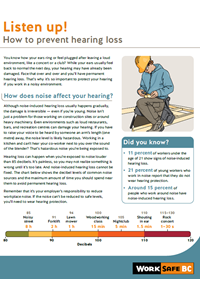
Listen up! How to prevent hearing loss
This information sheet outlines why noise-induced hearing loss is a hazard that workers of all ages need to take seriously. It is designed specifically for young workers to tell them about the hazards...
Title
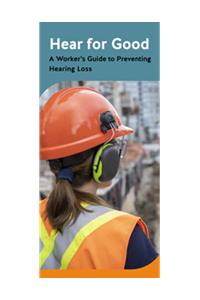
Hear for Good: A Worker’s Guide to Preventing Hearing Loss
High levels of noise on the job can permanently damage your hearing. This pamphlet explains how noise affects you and how to choose the right type of hearing protection. It also explains how to use...
Title

Protect Your Hearing: What Noise Does to Your Ears
Hearing loss can seriously affect your lifestyle. Watch this video to find out what workplace noise does to your ears and what you can do to prevent noise-induced hearing loss.
Related...
Title
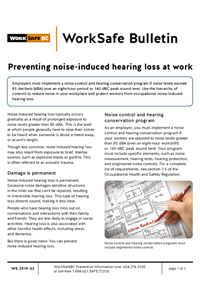
Preventing noise-induced hearing loss at work
Hearing loss can occur gradually as a result of prolonged exposure to noise levels greater than 85 decibels. This bulletin outlines how to use the hierarchy of controls to reduce noise in your workplace...
Title
Highlights
- New resource to help young workers prevent hearing loss Published on: June 11, 2020