
Finding strength in inspiring others
Published on: March 24, 2025
Nearly 28 years after Darcy Kulai was injured at work, the memory and the grief remain strikingly real, affecting him both physically and mentally. Now, he wants to inspire other young workers to stay safe on the job.
By Susan Kerschbaumer
In 1997, Kulai was 20 years old and working at a sawmill. He had just completed his second year at the University of Victoria. He planned to work through the summer, then transfer to Camosun College, where he was looking forward to an exciting year playing basketball on the college team.
Unfortunately, that’s not how the next year played out.
Experiencing a life-changing injury
On an evening shift, Kulai was stationed at the “stick belt,” a conveyor located in an out-of-the- way area of the mill. His job was to remove the supporting sticks from the lumber as it got sorted. When some sticks became caught in the conveyor belt’s chain, Kulai reached in to dislodge them.
“The glove on my left hand got sucked in and wrapped around the chain that was running underneath,” he remembers. “I tried to free it up by pulling on the chain with my right hand and it got sucked through the other end.” It wasn’t until the shift ended and the other machines were powered off that “the guys could hear my screaming and pulled me out.”
Once freed, Kulai was faced with devastating injuries to both of his hands. His right hand was amputated, and it took one year of surgeries — including using bones from his amputated right hand to piece together a left thumb, and grafting skin from his thigh to create a web between his rebuilt thumb and index finger — to bring more function back to his left hand.
Putting on a brave face
After leaving the hospital, Kulai was stoic. “People responded positively to that,” he says. “They would say I was doing so well, because I wasn’t an emotional mess.” Although he saw a psychologist, he just said the words he thought she wanted to hear.
“At the time, I didn’t realize the emotional side of it,” says Kulai.
Injuries like Kulai’s are often due to a combination of factors, such as lack of proper safeguarding and lockout procedures and inadequate supervision and training for new and young workers. Yet for years, Kulai has carried a burden of self-blame for what happened. “There was a stop button I should have pressed,” he says.
Although he went on with day-to-day life hoping no one would notice his injuries, his self-esteem plummeted. What feels like the “injustice of a workplace injury” makes recovery especially difficult, says Dr. Ashley Spetch, WorkSafeBC’s chief mental health officer. “Your expectations for the future are taken away in such an abrupt and catastrophic way — and in a way that could have been prevented.”
Facing an emotional toll
Despite trying to initially brush it off, Kulai was psychologically affected by the injury.
“Avoidance is a common part of coping when something feels too difficult, too awful, too painful,” says Spetch. “But for people who continue to avoid [the issue] over time, it creates an underlying anxiety.”
Spetch adds that “eventually these things bubble up.” For Kulai, that meant heart trouble, stomach issues, and anxiety. “I’m realizing there’s a connection between the heart, anxiety, and trauma,” he says. “I’m going back through it to see if I can get to the root.”
“It was a big event; it was on a very deep level. At the time, your focus is on the next surgery, on getting back to school and work,” he says. “But that stuff is so minor compared to feeling good in your own skin and not hating yourself.”
Sharing what he’s learned
When it comes to a healthier future, Kulai sees hope. His son is now 20 — the same age Kulai was when he was injured at work. “If my son got hurt, I’d be shattered,” he says. “Being a father has made me want to do more for young people — to see if there’s a way to inspire.”
With his son as a catalyst, he hopes he can use what he’s experienced to help others, and he has an important message to share: “Rushing at work and not following safety procedures can get you into serious trouble. You may think it cool or badass to not follow the rules, but it’s wrong. There’s never a reason to compromise safety.”
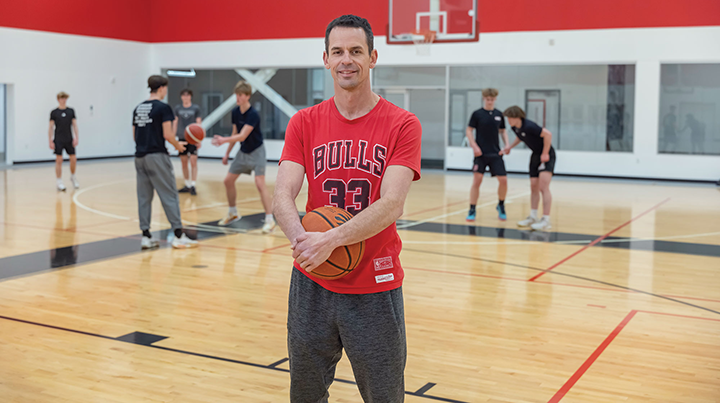
Kulai plans to make an impact on the students he coaches, too, with his story of hope. In the meantime, he’s glad to have found his path toward a holistic recovery.
This information originally appeared in the Spring 2025 issue of WorkSafe Magazine. To read more or to subscribe, visit WorkSafe Magazine.
Please help us understand how WorkSafe Magazine can serve you best by completing our online survey.
More in this issue
- Ask an officer: Properly fitting PPE leads to better worker protection
- A decade of data sharing distinguished by nine new dashboards
- Emergency planning for hazardous substances
- Hidden hazard in construction: Road safety risks beyond jobsites
- Introducing our new OHS advisor role
- Surplus helps keep premium rates stable
- Tea manufacturing steeped in safety
- Tips to keep construction workers safe while driving