
Worker fatally injured when I-beam tipped over
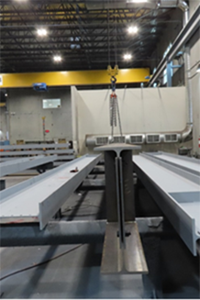
Date of incident: August 2020
Notice of incident number: 2020188180016
Employer: Structural metal fabrication company
Incident summary
At a structural steel manufacturing workshop, a worker was operating a gantry (overhead) crane equipped with a hoist and rigging to move and place steel I‑beams onto sawhorses for painting. The worker stepped between two I‑beams that were resting on sawhorses, removed the rigging from one of the I‑beams (which was standing vertically on its side), and placed the rigging behind the I‑beam (on the opposite side of the I‑beam from the worker). The worker raised the rigging with the crane and hoist. As the rigging was being raised, its hook caught the flange of the I‑beam, which then tipped over onto the worker and crushed him against the other I‑beam. The worker sustained fatal injuries.
Investigation conclusions
Cause
- Unsafe I‑beam placement and crane operation. A pinch point was created when the worker placed an I‑beam vertically on its side in the 0.9 m (3 ft.) space between two other I‑beams (both set horizontally flat). The worker stepped into the pinch point when he removed the rigging from the I‑beam that he had just placed. While still in the pinch point after he placed the rigging behind the I‑beam, the worker turned his back to the crane and rigging and raised the rigging using a remote control. The worker did not maintain physical control of the rigging until it had cleared the I‑beam.
- Lack of safety latch on hook. The hook caught the flange of the I‑beam as a result of not having a safety latch. Had the latch been in place, the hook would not have caught the flange as the rigging was raised. The rigging should have been removed from service until the broken‑off latch was repaired.
Contributing factors
- Inadequate supervision. The employer failed to provide supervisory training to the supervisor and also failed to provide adequate supervision to the worker. The employer did not ensure that the worker was inspecting the rigging daily and removing any damaged components from service; that the worker knew how to repair the safety latches on the hooks and was doing so before using the hooks; and that the worker knew how to use the crane and rigging safely and place the I‑beams without creating a pinch point. Working within a pinch point is contrary to the employer’s safety manual.
- Inadequate worker training. The employer stated that the worker had received verbal and hands‑on training to operate the crane and rigging; however, the training was not documented. Workers were also provided with refresher training after the company moved to its current location, but that training was not documented either, and no one could confirm that the worker had received the training.
- Lack of hazard assessment and safe work procedures. The employer failed to conduct a hazard assessment and develop safe work procedures for using the crane and rigging, including inspecting the rigging and repairing safety latches on hooks, and did not require workers to read the operator manuals for the crane and hoist. In addition, the employer did not have written safe work procedures for moving the I‑beams and placing them on the sawhorses without creating a pinch point.